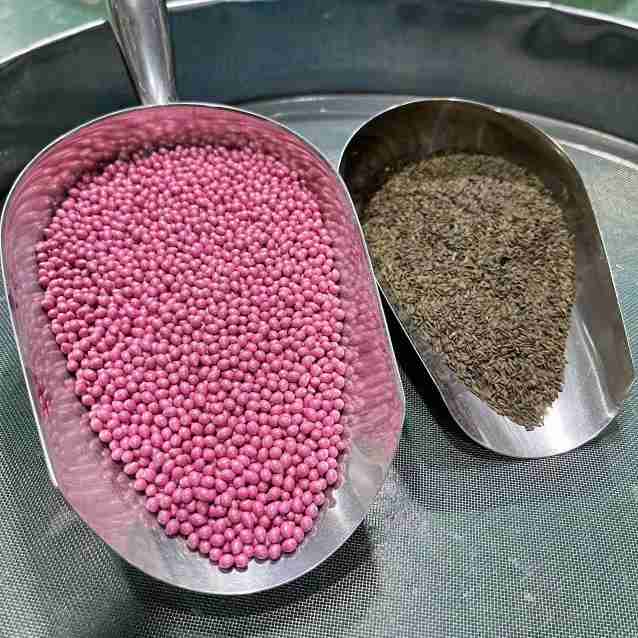
Lettuce seed pelletizing is a technique that improves seeding performance by coating seeds with special materials (such as fertilizers, chemicals, fillers, etc.), and it is suitable for mechanical seeding or small seed treatment
The pelletization of lettuce seeds has become quite common in commercial cultivation, especially in large-scale and mechanized agricultural production.
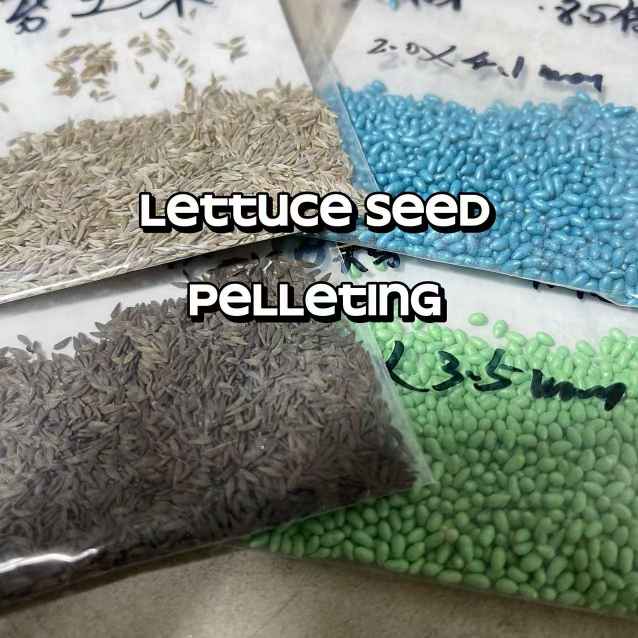
Convenient for mechanical sowing: Lettuce seeds themselves are very small (usually 1-3 millimeters), light in weight, and it is difficult to precisely control the density when sowing directly. After pelletizing, the volume increases, facilitating uniform sowing by precision seeders, saving seeds and reducing thinning costs.
Improving germination rate: Pelleted materials may contain moisturizers, nutrients or fungicides, which can help improve the germination environment, especially under drought or low-temperature conditions.
Standardized production: Suitable for factory-based seedling raising or large-scale farms, it enhances sowing efficiency.
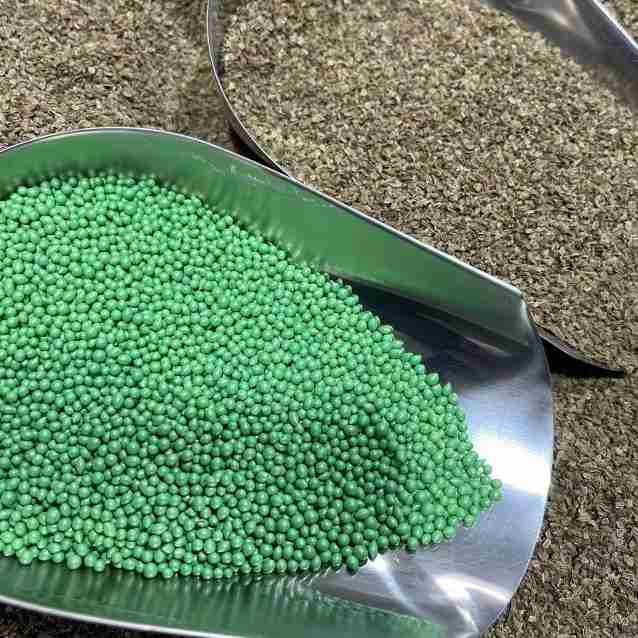
2. Application scenarios
Large-scale vegetable cultivation: In regions with a high degree of mechanization such as Europe, America, and Australia, pelletized raw vegetable seeds are commonly used.
Seedling tray sowing: Pelletized seeds can be precisely positioned in tray seedling raising, reducing the rate of empty holes.
Special varieties: Some hybrid lettuce or high-value varieties (such as head lettuce) are more often pelletized to reduce costs.