
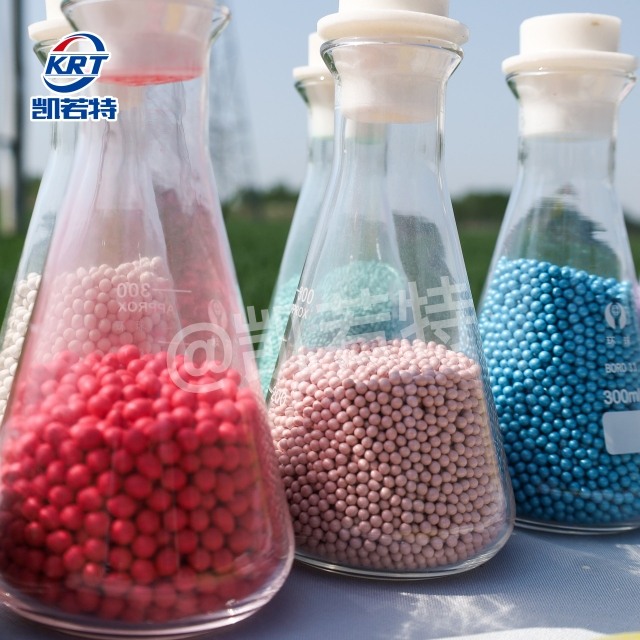
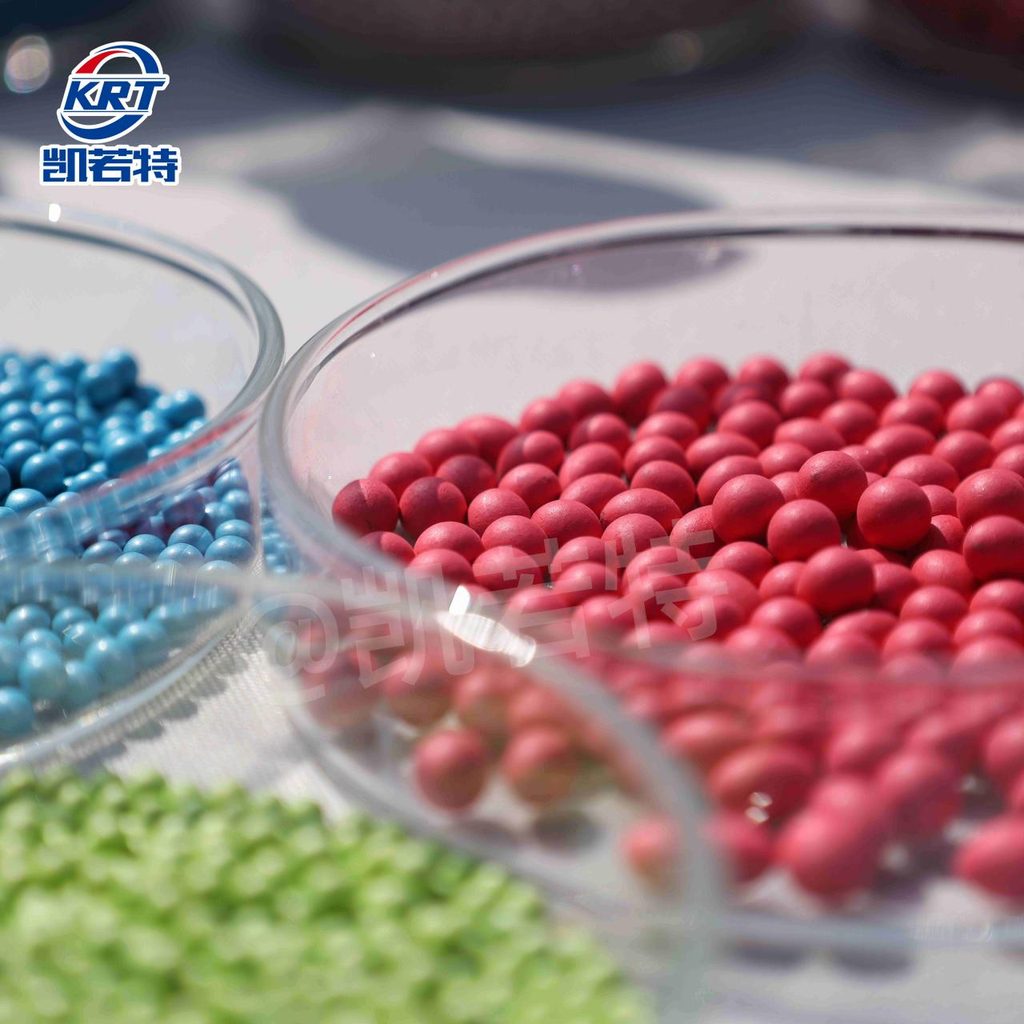
Small, light seeds have poor flow characteristics and are hard to sow evenly.. This not only causes seed waste, but also requires manual thinning later, raising labor and time costs. It also results in uneven germination and irregular growth, which reduces the commodity rate of crops. A seed pelleting machine takes tiny, light, irregularly shaped seeds and coats them layer by layer with powder through centrifugal pelleting technology to form round and uniform pellets. The seeds become larger and heavier, making them suitable for precision sowing.
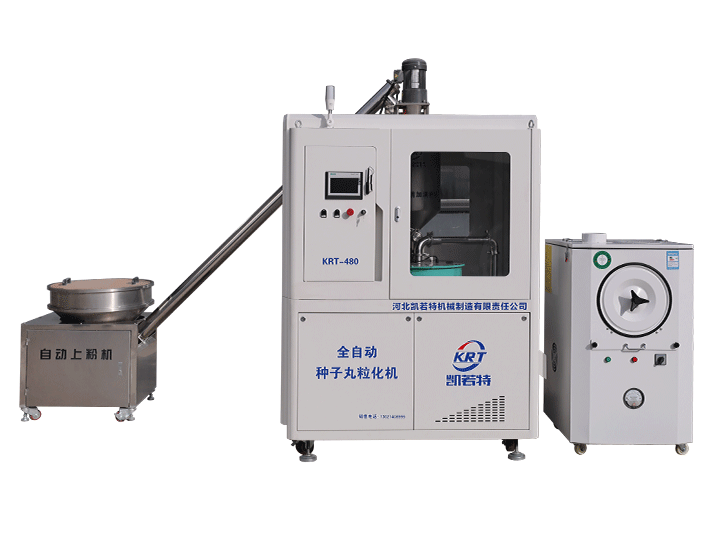
The KRT-480 automatic seed pelleting machine consists of three parts: the pelleting main unit, automatic feeding elevator and pulse dust collector, enabling fully automatic integrated operation.
Seed pelleting machine with a German Siemens control system,it delivers precise control and stable operation. It supports formula memory to avoid repeated proportioning. It is easy to operate, and customized pelleting solutions can be provided according to customer requirements. It adopts centrifugal pelleting technology to keep seeds in a suspended state for 360° even powder coating.
The powder feeding system uses weight-based weighing to ensure consistent and stable powder supply.The liquid feeding system is fitted with a medical-grade liquid pump with milliliter-level control accuracy for stable and uniform spraying.
The gap between the centrifugal disc and the barrel wall is only 0.1–0.15 mm. Even ultra-fine seeds will not jam the disc or leak.
Its processing capacity ranges from 300 g to 3000 g per batch, with a processing time of 30–40 minutes, offering high efficiency. The single-seed rate of finished pellets ≥99%, uniformity ≥99%. The whole pelleting process runs at low temperature to protect seed vitality and germination rate, ensuring the germination rate stays the same as raw seeds.
Pelleted seeds can be used with plug tray seeders and vacuum seeders to achieve precision sowing of one seed per cell. It saves labor and seeds, ensures uniform germination, consistent growth and well-developed root systems. It improves the quality of finished vegetables and crop commodity rate, cutting costs and boosting profits.